
Solitaire Scoring System: How Is Solitaire Scored?
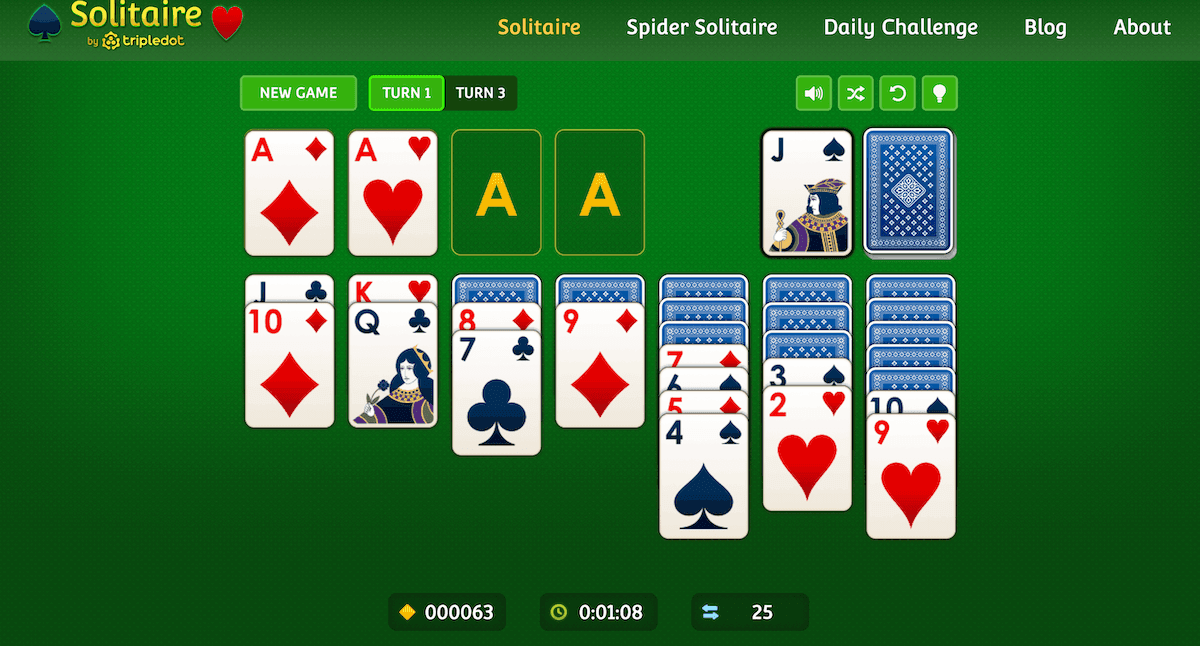
Solitaire scoring rewards players for making progress through the game. In Classic Solitaire (also known as Klondike), points are awarded for specific actions, such as moving cards to the foundation and uncovering face-down cards.
Here are the most common scoring values used in standard Classic Solitaire:
- Moving a card to the foundation: +10 points
- Flipping a face-down card in the tableau: +5 points
- Moving a card from the waste pile to the tableau: +5 points
- Cycling through the stockpile in Draw 3 mode: -100 points per redeal
- In timed games, -2 points every 10 seconds may apply
- A time bonus is sometimes awarded at the end of the game based on how quickly you finish
Players who enjoy classic, relaxing gameplay often prefer this clear and supportive scoring system.
Classic Solitaire Scoring System (Standard Scoring)
Classic Solitaire, also called Klondike, is the most well-known version of Solitaire. Scoring in this game is based on the moves you make and how efficiently you play. The system rewards steady progress and encourages thoughtful decisions.
Actions That Add Points
Each move that brings you closer to completing the foundations increases your score:
- +10 points for moving a card from the tableau or waste pile to a foundation pile
- +5 points for turning over a face-down card in the tableau
- +5 points for moving a card from the waste pile to the tableau
For example, if you move the 7♣ from the waste pile to the 8♦ in the tableau, you earn 5 points. Later, placing the same 7♣ on a foundation pile scores an additional 10 points.
Actions That Reduce Points
Some actions subtract from your total score, especially when the game is set to a timed or Draw 3 mode:
- -100 points for cycling through the stockpile (when using Draw 3 mode)
- -2 points every 10 seconds in timed games (this encourages quicker play)
These penalties are designed to challenge the player without making the game feel punishing.
Time Bonuses in Timed Games
In timed Solitaire, a bonus is added to your final score based on how fast you complete the game:
Time Bonus = 700,000 ÷ total seconds
This means finishing faster gives you a higher bonus.
Draw 1 vs. Draw 3: How Scoring Changes
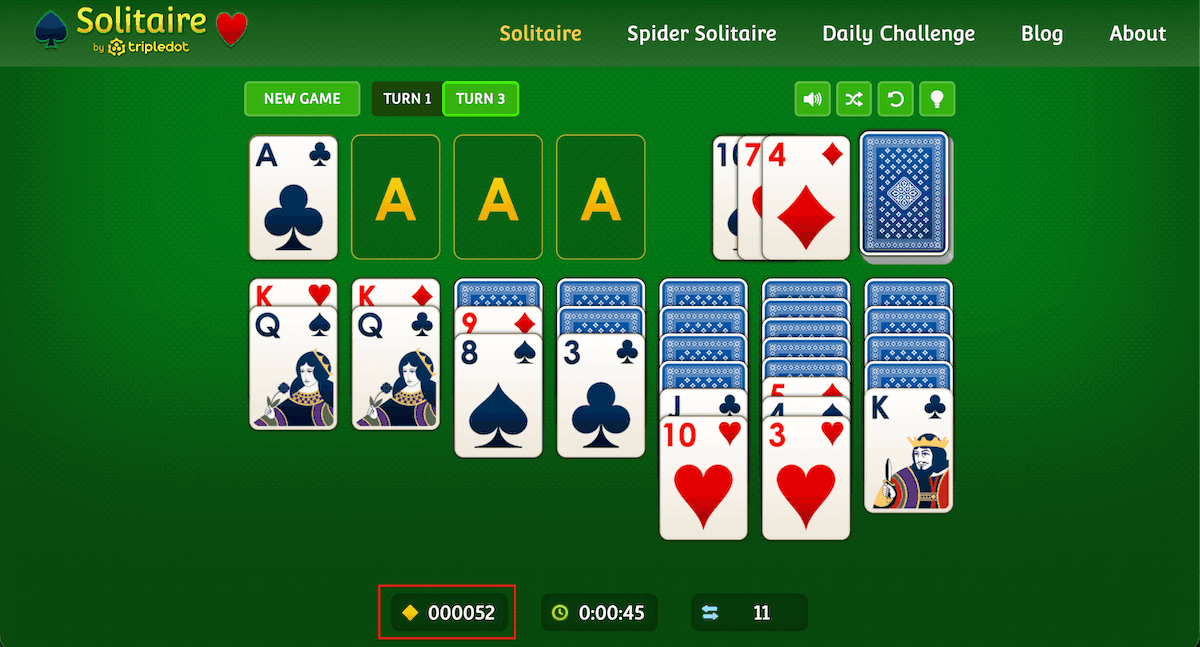
The mode you choose affects how often you can cycle through the stockpile:
- Draw 1: You see one card at a time and can move through the stock freely
- Draw 3: You see three cards at a time, and each redeal costs 100 points
Draw 1 is more forgiving and is often preferred by players who want to avoid point deductions. Draw 3 introduces greater difficulty and more severe scoring penalties.
Solitaire.com Classic Scoring: Specific Rules
Solitaire.com uses a modified Standard scoring system with some unique tweaks:
Starting Score and Minimum: Players begin each game with 0 points. Your score cannot go below 0 points at any time during the game.
Point-Earning Actions:
- +10 points: Moving a card to the Foundation
- +5 points: Revealing a card in the Tableau
Point Deductions:
- -2 points: Every 10 seconds of playtime
- -15 points: Moving a card from the Foundation back to the Tableau
Graduated Reshuffle Penalties:
On Solitaire.com, the penalty for reshuffling the Stock decreases with each pass:
- -100 points: After 1st pass through the deck
- -40 points: After 2nd pass through the deck
- -20 points: After 3rd pass through the deck
This rewards players who can complete the game with fewer passes through the Stock.
Win Bonus: If you win, a bonus is added: 700,000 ÷ total seconds. However, if you complete the game in 30 seconds or less, no bonus points are awarded. The higher your final score, the better.
Turn Variants:
- Turn 1: Only one card is revealed from the Stock at a time
- Turn 3: Three cards are pulled at once; only the topmost card can be selected
Standard vs. Vegas Scoring: What's the Difference?
Many players come across the terms Standard scoring and Vegas scoring when playing on different platforms. These two systems reward very different styles of play.
Standard Scoring
This is the most common and beginner-friendly scoring method. You earn points for making good moves, such as flipping over cards, uncovering hidden ones, and building foundation piles.
- Starting score: 0
- Gain points for each helpful move
- Lose points for stock redeals or taking too long (in timed mode)
- Time bonus may apply if you finish quickly
Vegas Scoring
Vegas scoring turns Solitaire into a gambling-style challenge. The goal is not to collect points, but to come out ahead financially.
- Starting score: -52 (as if you "paid" $1 per card in the stock)
- Earn $5 for each card moved to the foundation
- No time bonus or penalties
- Some versions offer a "cumulative" Vegas mode, where you play multiple rounds trying to earn a profit over time
Vegas scoring is available in some versions of Microsoft Solitaire and other apps.
Spider Solitaire Scoring Overview
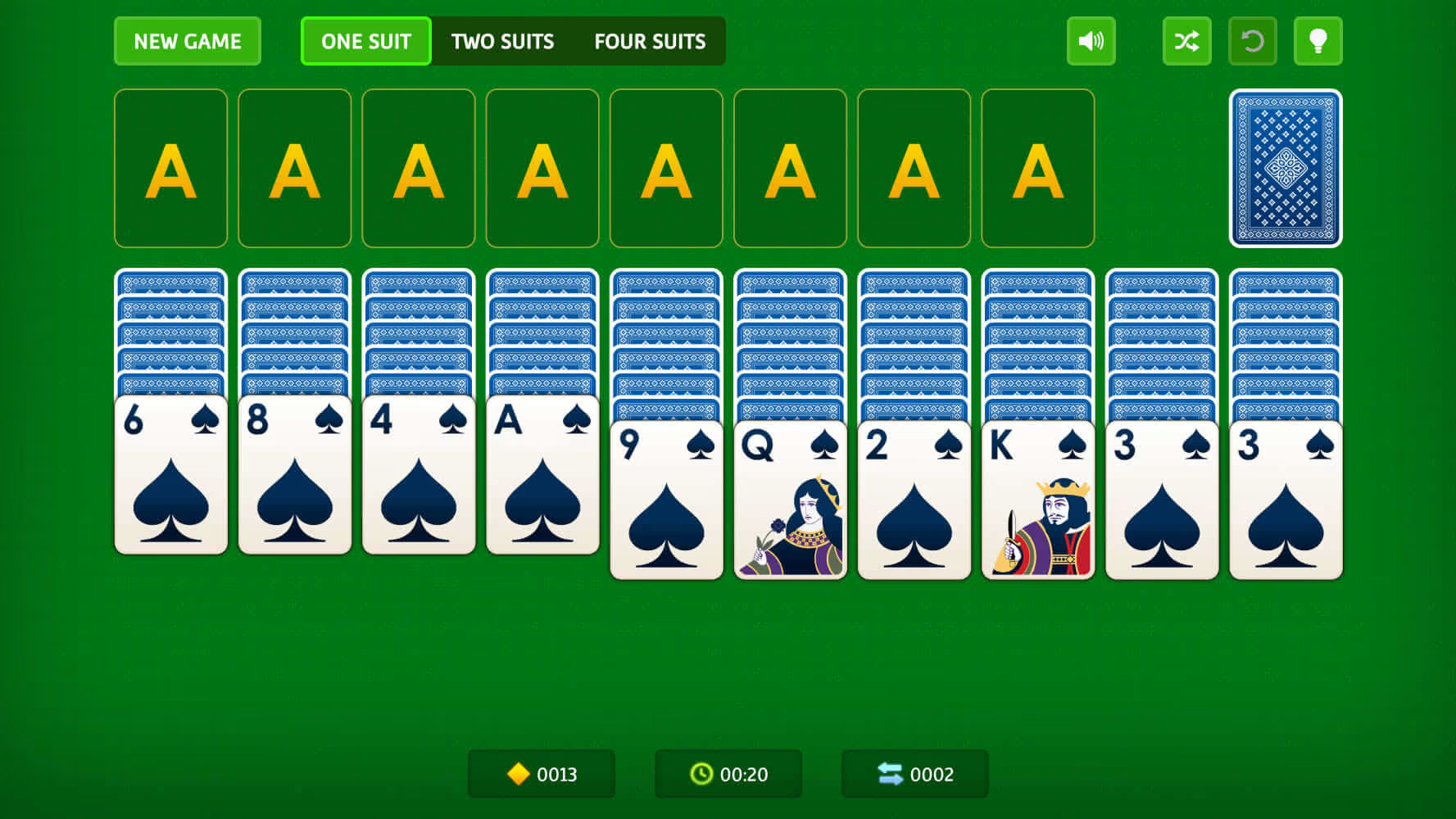
Spider Solitaire is more challenging than Classic Solitaire, especially in 2- or 4-suit versions. Scoring in Spider is simpler, but the strategy is more advanced.
Traditional Spider Scoring
Most versions of Spider Solitaire use this system:
- You start with 500 points
- Each move costs 1 point
- Completing a full suit sequence (King to Ace) earns +100 points
For example, if you complete five full suits and use 200 moves, your final score would be:
500 starting points – 200 moves + 500 points (5 sequences) = 800 points
Solitaire.com Spider Scoring
On Solitaire.com, Spider uses a different approach:
- Starting Score: 0 points (cannot go below 0)
- Final Score: Total Moves + Time (in seconds)
- Goal: The lower the final score, the better
This is the opposite of Classic Solitaire, where higher scores are better. Efficient players who complete the game quickly with fewer moves will achieve the best results.
Difficulty and Suit Count
Spider Solitaire has multiple difficulty levels:
- 1-suit (easiest): All cards are from the same suit
- 2-suit (moderate): Two suits are used
- 4-suit (hardest): All four suits, requiring advanced planning
More suits make it harder to create clean sequences. However, completing a 4-suit game is a strong accomplishment, no matter the score.
Microsoft Solitaire Scoring Rules (For Comparison)
Microsoft Solitaire offers multiple scoring styles depending on the game and settings.
Game Modes Offered
Players can choose between:
- Standard scoring
- Vegas scoring
- Vegas cumulative scoring (score continues over multiple games)
- Timed mode (adds time-based scoring bonus)
Each mode affects the pace and strategy of play.
Undo and Time Effects
In Microsoft's timed modes:
- Undoing a move may reduce your bonus or final score
- Faster finishes usually result in a higher score due to a time-based bonus
These scoring effects make it important to balance accuracy with speed.
What Is a Good Solitaire Score?
A "good" Solitaire score depends on the version, scoring mode, and how the game is played.
Classic Solitaire Scoring Benchmarks
- 600 to 700 points is considered a strong score
- 740 points is the maximum in untimed Standard mode (with perfect play)
- With the time bonus included, scores may go higher
When measuring your performance, remember:
- Draw 1 is easier to win, but harder to score high
- Draw 3 offers more scoring chances, but more penalties
- Timed games allow bonus points
- Using undo may or may not affect the score, depending on the platform
Even expert players don't win every game or reach perfect scores. The goal is steady improvement over time.
Tips to Maximize Your Solitaire Score
Improving your score in Solitaire is about practicing smart habits and avoiding small mistakes. Here are a few tips that apply to Classic and Spider Solitaire.
Flip Face-Down Cards Early
Always try to uncover face-down cards in the tableau. This increases your available moves and often leads to point-earning plays.
For example, uncovering a face-down 9♠ might let you move the 8♥, opening a spot for a King and clearing more cards.
Delay Foundation Moves When Needed
While it's tempting to move cards to the foundation quickly, waiting can give you more flexibility. Keeping lower cards in the tableau may allow additional sequences to form.
Only place cards on the foundation when they do not block other moves.
Limit Redeals in Draw 3 Mode
Each stock redeal in Draw 3 mode usually costs 100 points. Try to plan ahead so you don't need to cycle through the stock repeatedly.
Rearranging tableau cards before drawing more can help reduce these penalties.
Use Undo Strategically
On Solitaire.com, using Undo does not reduce your score. This makes it a great tool for testing strategies or recovering from a mistake.
If you're stuck, try a different path using Undo to see if it leads to a better outcome.
Solitaire.com Scoring System: Simple and Supportive
What Makes It Unique
Solitaire.com is designed for casual players and returning card fans. It keeps scoring simple by using the Standard Model:
- No imaginary bets
- No negative starting scores
- No pressure from cumulative scoring
You earn points for playing well, and there are no hidden penalties.
Features That Help You Learn and Improve
Solitaire.com includes:
- Unlimited Undo: Perfect for learning or fixing a misstep
- Hint button: Gives gentle guidance without spoiling the challenge
- Daily Challenge
- Free access on web and mobile
These tools help players enjoy the game without pressure and improve at their own pace.
Improve Your Solitaire Score Today
Solitaire scoring can seem complex at first, but it follows simple patterns. You earn points by making smart moves, flipping cards, and finishing efficiently. With unlimited Undo and no penalties for testing strategies, Solitaire.com is a great place to improve your score without pressure.
Ready to play? Start a game of Classic or Spider Solitaire today and try to beat your high score.
Frequently Asked Questions (FAQs)
How is Solitaire scored? In Classic Solitaire, you earn points by moving cards to the foundation and flipping face-down cards. Some moves may reduce your score, such as redeals or time penalties in timed games.
What is a good score in Solitaire? A good Classic Solitaire score is usually between 600 and 700. A perfect game can reach 740 points in untimed mode.
Does undo reduce your score? Not on Solitaire.com. You can use Undo freely to test moves or recover from mistakes.
How does time affect Solitaire scoring? In timed games, finishing faster gives a time bonus. A common formula is 700,000 divided by the number of seconds.
Is Solitaire scoring the same across all platforms? No. Microsoft Solitaire, Solitaire.com, and mobile versions may use different systems or bonuses.
Can I play without scoring? Yes. Many platforms, including Solitaire.com, let you focus on completing the game rather than tracking points.