
How to Win TriPeaks Solitaire: Proven Strategies to Clear All Three Peaks
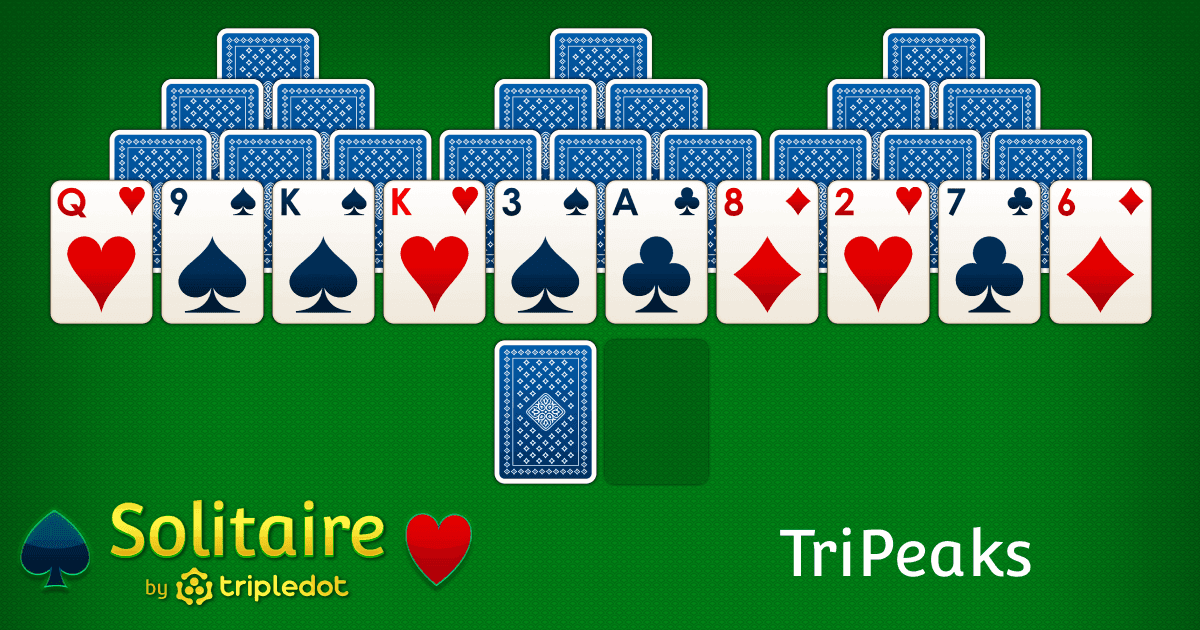
Winning TriPeaks Solitaire comes down to one habit: building the longest card chains you can before you draw. Players who plan their chains win far more often than players who grab the first match they see. With optimal play, win rates can reach 80-95%. Casual play lands much lower. This guide walks you through the strategies that move you toward the high end, one peak at a time.
You can practice every tip below on TriPeaks Solitaire at Solitaire.com. Free to play, no ads.
TriPeaks at a Glance: How the Matching Mechanic Works
TriPeaks Solitaire is won by clearing all three peaks before the stock pile runs out, using a single-card matching rule. You play any exposed card that is one rank higher or lower than the top card on the waste pile. The waste pile is the single face-up card you build from. Suits do not matter, so a red 6 or a black 6 both work on a 7.
A card becomes playable once no other card overlaps it. When you run out of matches, you flip a new card from the stock pile (the face-down draw pile). Aces and Kings wrap around, so you can play a King on an Ace and an Ace on a King. That recap is all the rules you need here. The rest of this guide is about winning.
Build the Longest Possible Sequences
The single biggest key to winning TriPeaks is chaining many cards into a single unbroken run. Each card you play becomes the new top of the waste pile. So a 5, then 6, then 7, then 8 can come off in one smooth streak. Long chains clear the board fast and protect your stock pile for later.
Before you tap a card, look ahead two or three steps. Ask which card opens up the next match. For example, play the 4 that lets you reach a 5, which reaches a 6. A short, careless chain wastes the very cards a longer chain would have used.
When to Flip from the Stock (and When to Hold)
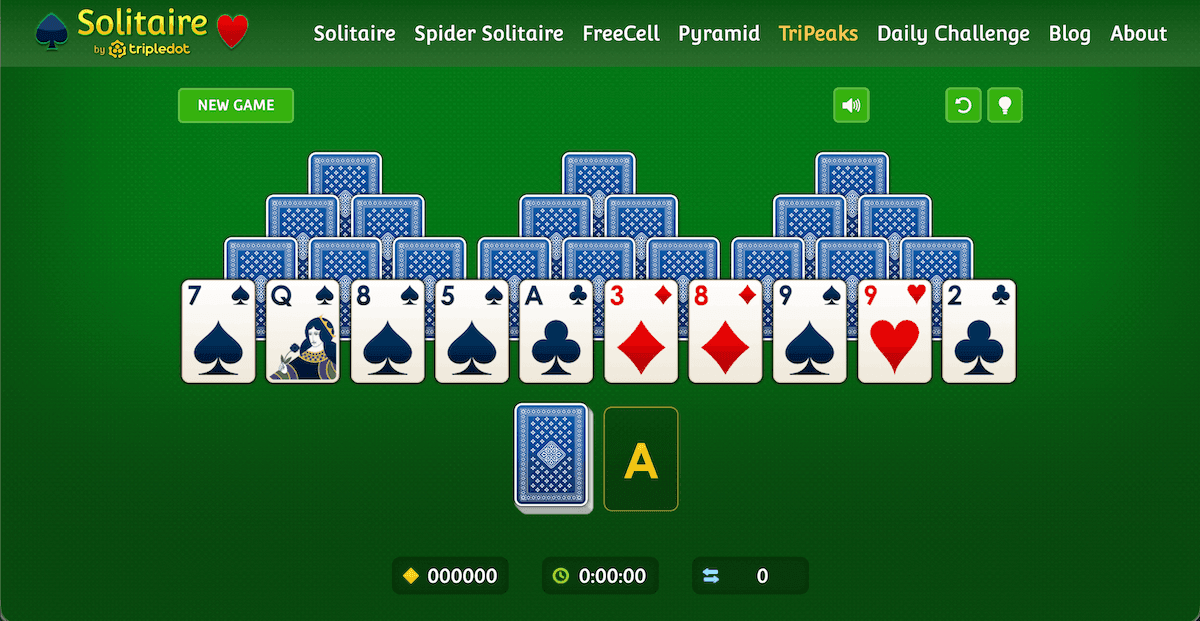
Draw from the stock pile only when no chain is possible on the board. Every flip you spend is a card you cannot get back. Many TriPeaks games are lost because players flip too early and run dry near the end.
First, scan all three peaks for any legal match. Next, trace the longest chain that those matches allow. Only when nothing connects should you flip a new card. If you are unsure, the hint button on Solitaire.com points to a legal move you may have missed. Holding your draws is one of the most reliable ways to lift your win rate.
Prioritize Cards That Unblock Multiple Peaks
Focus on cards that free the most covered cards at once, since the peaks overlap and one card often blocks two cards beneath it. Removing that blocker opens new options across the board.
Work across all three peaks evenly rather than clearing one side first. A lopsided board traps cards on the neglected peak. For example, a 9 that uncovers cards in two peaks beats a 9 that uncovers nothing. This single habit separates strong players from casual ones.
Use Wild Cards (Kings) Strategically
Kings and Aces are your wrap-around tools, so treat them as flexible connectors that bridge broken chains. A King can follow a Queen or an Ace. That makes it useful for bridging two broken chains. Hold a King in the waste pile when it can extend a run on either side.
Plan around these wrap points. For example, an Ace lets you jump from a King back down to a 2. Used well, these cards turn two broken chains into one long winning streak. Used carelessly, they get spent on a single match and waste their bridging power.
Common TriPeaks Mistakes to Avoid
Most TriPeaks losses stem from three recurring mistakes, and spotting them early will improve your results quickly.
First, players draw from the stock pile before checking the whole board. This burns cards they did not need to spend. Second, players grab the first match instead of the longest chain. A quick win on one card can cost you four. Third, players clear one peak and ignore the others, which traps cards they can no longer reach. Even strong players slip into these habits, so a short pause before each move helps.
Advanced TriPeaks Tips for Higher Scores
Advanced TriPeaks play means thinking several moves ahead, not just the next match. Once the basics feel natural, these habits push your scores higher.
Try to keep at least one open path in each peak as you play. This gives future chains somewhere to go. Use the Unlimited Undo button on Solitaire.com to test a different route when a chain stalls.
There is no penalty for going back, so it is a safe way to learn which order works best. The same planning skills carry over to other games in our guide to types of solitaire games.
TriPeaks Win Rate and Average Game Time
TriPeaks Solitaire has a high win rate when you play with strategy, often reaching 80 to 95 percent with optimal play. Casual play, where cards are matched without planning, lands well below that range. Most games take only 2 to 5 minutes, which makes TriPeaks a quick mental break.
Win rate also depends on the deal, since some layouts are harder than others. Steady practice and careful chain-building both help.
For how TriPeaks compares to other variants, see our breakdown of solitaire win rates. Many players sharpen their chain-building through the Daily Challenge, which offers a fresh puzzle each day.
TriPeaks Scoring: How Streaks Multiply Your Score
Your TriPeaks score grows with every card in an unbroken streak, so chain length is the biggest factor in a high score. The first match scores a base amount. Each card you add to the chain after that scores more than the last. So a streak of eight cards is worth far more than eight separate single matches.
Drawing from the stock pile resets the streak back to the base. This is another reason to hold your draws and build long chains first.
Solitaire.com uses classic scoring rather than Vegas-style wagering, so you can focus on clean play instead of money. Carry these habits into other games with our solitaire strategies. Then try the same chain-first mindset in Classic Solitaire.