
Card Games for Seniors: Keep Your Mind Sharp While Having Fun

Card games offer more than just light entertainment. For seniors, they provide a mix of mental engagement, social connection, and emotional satisfaction. Whether played solo at home or around a table with friends, card games can offer cognitive engagement and may support memory and focus practice, all while offering simple joy.
From traditional favorites like Rummy and Bridge to digital classics like Solitaire, there's a card game for every kind of player and ability level.
This guide highlights 12 of the best card games for seniors. You'll find solo games for quiet moments, social games for group fun, and suggestions for adapting each to different comfort levels, mobility, and memory needs.
Choose a Game by Your Goal
Every person has different preferences. Some enjoy calm solo play, while others look forward to friendly competition. The right card game depends on your goals, whether that's memory practice, strategic thinking, or simply connecting with others.
For Memory & Recall: Go Fish, Memory Match, Rummy
For Strategy & Planning: Bridge, Spades, Cribbage
For Solo Focus & Relaxation: Klondike Solitaire, Spider Solitaire, FreeCell, Pyramid
For Easy Fun: Crazy Eights, Old Maid, UNO
Best Solo Card Games for Seniors
Solo card games offer quiet, focused entertainment that doesn't require coordinating with others. These games are perfect for maintaining engagement while enjoying peaceful moments alone.
1. Klondike Solitaire
Players: 1 | Difficulty: Easy to moderate | Play Time: 10-15 minutes
Cognitive Focus: Planning, problem-solving, visual scanning
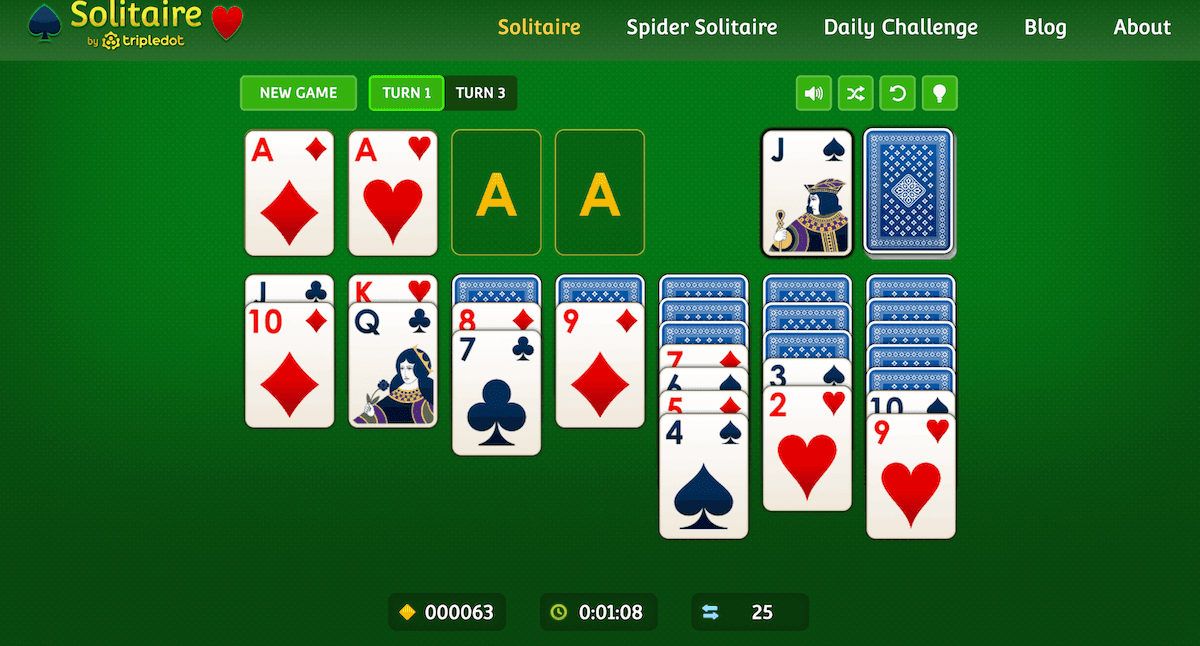
Klondike is the most recognized version of Solitaire. The goal is to move all cards to the Foundation, sorting them by suit and in ascending order. It encourages thinking ahead and managing multiple steps.
Why Seniors Like It: Offers quiet, focused entertainment without needing a partner.
Where to Play: Play Classic Solitaire at Solitaire.com
The Undo and Hint features on Solitaire.com make it forgiving and friendly for beginners. Learn more about single-player card games for additional solo options.
2. Spider Solitaire (1-2 Suit)
Players: 1 | Difficulty: Moderate (1-suit), Challenging (2-suit) | Play Time: 15-30 minutes
Cognitive Focus: Strategy, sequencing, long-term planning
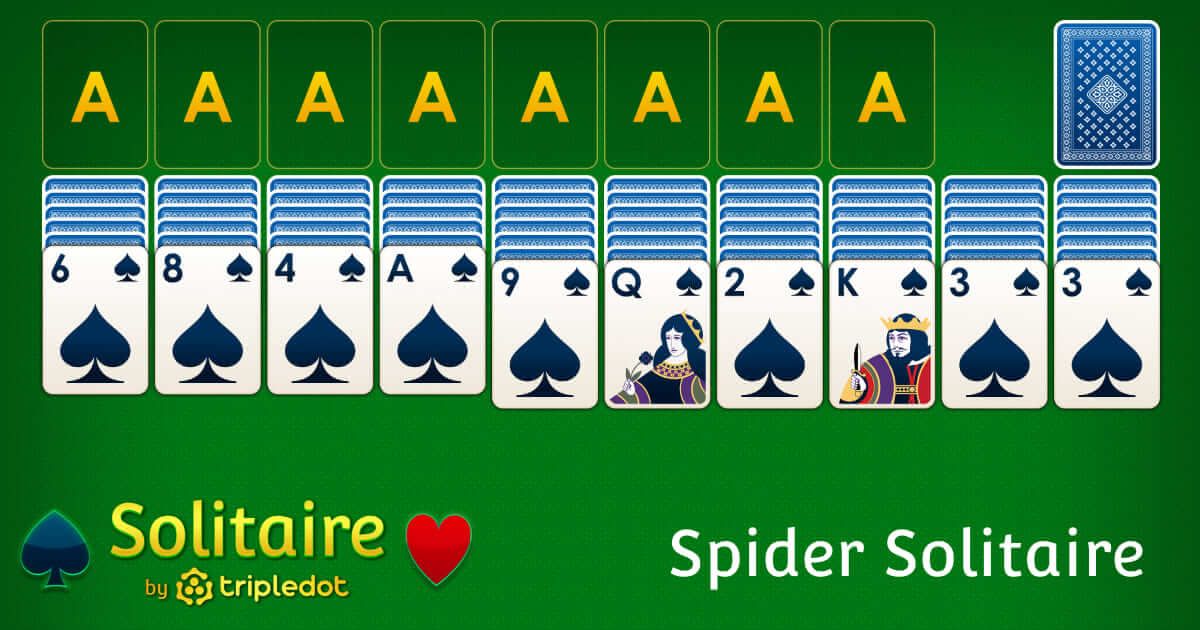
Spider Solitaire is a step up in complexity and ideal for players who want more strategy. Starting with 1 suit helps with learning the mechanics, while 2-suit mode adds variety. It encourages logical thinking and trial-and-error exploration.
Why Seniors Like It: A more layered challenge than Klondike for those who enjoy puzzles.
Where to Play: Play Spider Solitaire at Solitaire.com
Online versions allow suit choice for easier gameplay.
3. FreeCell
Players: 1 | Difficulty: Moderate | Play Time: 10-20 minutes
Cognitive Focus: Logic, problem-solving, sequencing
FreeCell differs from other Solitaire variants because all cards are visible from the start. This removes the luck factor and emphasizes pure strategy. It's great for mental engagement without relying on memory.
Why Seniors Like It: Every deal is winnable, creating a satisfying challenge.
Accessibility Tip: Digital versions offer clear movement and no physical shuffling.
Curious about your chances? Check out the winning odds for Solitaire to understand how different variants compare.
4. Pyramid Solitaire
Players: 1 | Difficulty: Easy | Play Time: 5-10 minutes
Cognitive Focus: Number pairing, visual pattern recognition
Pyramid requires players to pair cards that add up to 13, gradually clearing the tableau. It involves basic arithmetic and encourages short-term planning.
Why Seniors Like It: Quick and rewarding with every small success.
Accessibility Tip: Large cards and clear pairing rules help with vision or memory limitations.
Group Card Games for Seniors
Group games encourage social interaction, conversation, and shared experiences. These easy card games for work well in community centers, family gatherings, or regular game nights with friends.
5. Go Fish
Players: 2-6 | Difficulty: Easy | Play Time: 10-15 minutes
Cognitive Focus: Memory recall, simple matching
Go Fish may provide appropriate engagement for those with mild memory loss or early dementia. It requires players to remember what cards others have asked for and encourages polite conversation.
Why Seniors Like It: Familiar childhood game that encourages lighthearted social interaction.
Accessibility Tip: Modify rules to use fewer cards for simplicity. Perfect for grandchildren and intergenerational play.
6. Memory Match (Concentration)
Players: 1-4 | Difficulty: Easy | Play Time: 10-20 minutes
Cognitive Focus: Short-term memory, visual recall
In this game, players take turns flipping two cards to find matching pairs. It's simple and can support memory and focus practice.
Why Seniors Like It: Sharpens focus in a gentle, familiar way.
Accessibility Tip: Use oversized cards or photo-based decks to support memory. You can make it more personal by using photo cards or custom images.
7. Rummy / Gin Rummy
Players: 2-6 | Difficulty: Moderate | Play Time: 20-30 minutes
Cognitive Focus: Pattern recognition, memory, number sequencing
Rummy encourages players to collect sets or runs. Gin Rummy is a quicker version, ideal for two players. Both versions encourage repeated use of memory and adaptive thinking as the hand develops.
Why Seniors Like It: Combines strategy with friendly competition.
Accessibility Tip: Use larger cards or play in pairs for cooperative support.
8. Bridge
Players: 4 (two partnerships) | Difficulty: Advanced | Play Time: 45-60 minutes
Cognitive Focus: Strategic bidding, planning, memory
Bridge is beloved by lifelong players for its mental depth. It involves planning, cooperation, and pattern tracking, all while fostering long-term social bonds.
Why Seniors Like It: Deep, social game with endless variety and learning potential.
Accessibility Tip: Use bidding cheat sheets or simplified versions to make play easier. Many senior centers host bridge clubs that help with routine and companionship.
9. Spades
Players: 4 (partnerships or individuals) | Difficulty: Moderate | Play Time: 30-40 minutes
Cognitive Focus: Bidding, probability, turn tracking
Spades is another trick-taking game that relies on planning and partnership. Players bid how many tricks they expect to win and must work with their partner to meet that bid.
Why Seniors Like It: Strategic but relaxed pace; promotes teamwork.
Accessibility Tip: Visual aids or scorecards help with tracking rounds.
10. Cribbage
Players: 2-4 | Difficulty: Moderate to advanced | Play Time: 20-30 minutes
Cognitive Focus: Mental math, sequencing, memory
Cribbage is both a card and a counting game, encouraging players to spot combinations and add scores quickly. The physical pegging board adds an extra layer of engagement and supports tactile learning.
Why Seniors Like It: Combines cards with a tactile pegboard for scorekeeping.
Accessibility Tip: Use larger boards and simpler scoring rules if needed.
11. Crazy Eights
Players: 2-6 | Difficulty: Easy | Play Time: 15-20 minutes
Cognitive Focus: Pattern matching, attention switching
Crazy Eights has flexible rules that can be adjusted to suit the players. Matching by suit or number, it offers easy pattern recognition and quick play for laughs and light interaction.
Why Seniors Like It: Fast-paced and fun, easy to pick up at any age.
Accessibility Tip: Use bright cards or color-coded decks for easier visual tracking.
12. Old Maid / UNO
Players: 2-6 | Difficulty: Easy | Play Time: 10-15 minutes
Cognitive Focus: Pattern recognition, social interaction
Both Old Maid and UNO offer simple mechanics and playful engagement. They're great for family gatherings and can be customized with house rules to suit any skill level.
Why Seniors Like It: Humorous, light competition without stress.
Accessibility Tip: Jumbo decks are available in both games.
How Card Games May Support Cognitive Health
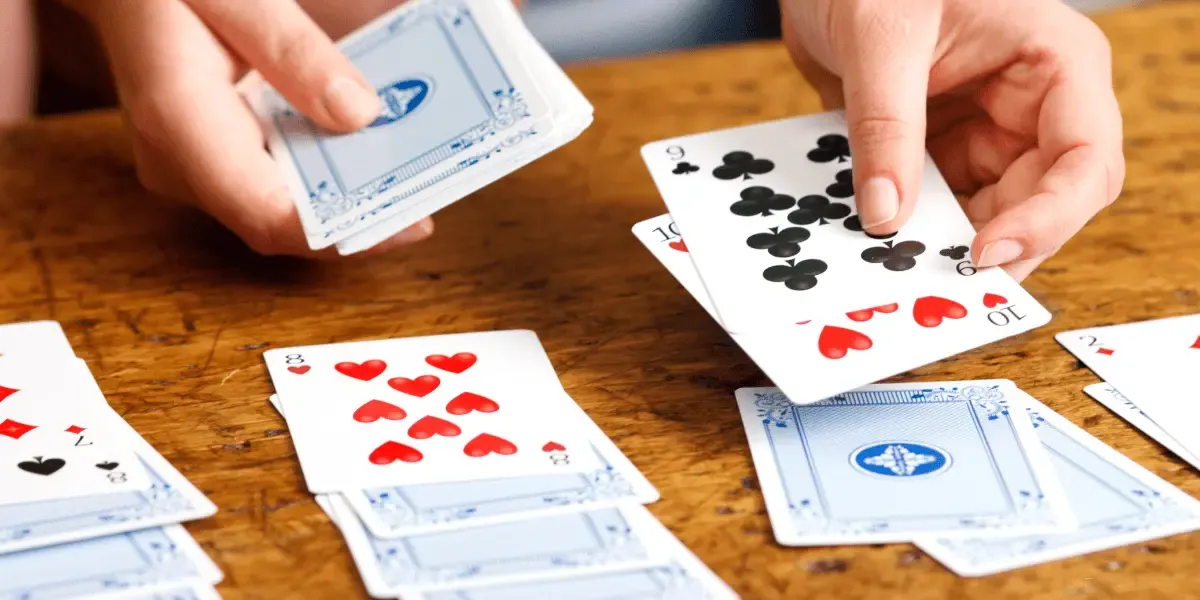
Playing card games regularly may help seniors engage various mental functions. Research has found associations between mentally stimulating leisure activities and cognitive health in older adults, though individual results vary.
Memory and Recall
Games like Rummy and Go Fish ask players to remember past moves and cards, which may support short-term memory practice. These memory card games for seniors provide gentle cognitive engagement.
Focus and Attention
Solitaire, Spider, and FreeCell encourage sustained attention and focus without overwhelming the player. The structured nature of these games may support concentration practice.
Strategic Thinking
Games like Bridge and Spades require planning, adaptation, and cooperation, which engage executive function. These games provide practice in skills used in everyday decision-making.
Social and Emotional Health
Group play can help reduce isolation, foster communication, and positively affect mood, especially important for seniors living alone or in care homes. Regular card games provide structure and social connection.
Motor Skills and Dexterity
Handling cards, using card holders, or interacting with a computer or tablet screen involves fine motor coordination and tactile engagement.
Modifications for Accessibility
Every game can be adapted to meet individual needs. Here are some suggestions to make play more comfortable and inclusive.
For Low Vision
- Use large-print playing cards
- Choose digital games with high contrast or zoom features
- Add extra lighting around the table
For Limited Dexterity or Arthritis
- Use card holders that prop cards upright
- Try games with fewer cards in hand
- Play shorter rounds or use online options to remove physical handling
For Memory Support or Dementia
- Choose games with familiar rules like Go Fish or Memory Match
- Use picture-based decks
- Repeat simple routines with gentle reminders
Where to Play - Online and Offline Options
Many seniors enjoy the feel of real cards in hand, while others prefer the convenience of playing online.
Solitaire.com - Free online play for Klondike, Spider, FreeCell, and more. Includes hints and Undo buttons. No download or signup required.
Tablets or smartphones - Many apps feature large buttons and customizable game modes.
Printable resources - Scorecards and basic rules help with setup and learning.
Ready to Play? Start Today
Choosing the right card game can turn a quiet afternoon into something mentally engaging and socially uplifting. Whether you're looking for solo relaxation or a group activity with family or friends, card games are a timeless way to connect and enjoy time together.
Start with one game from this list today. If you're not sure where to begin, try Klondike Solitaire at Solitaire.com. No download required.
FAQs
What are the best memory card games for seniors?
Go Fish, Rummy, and Memory Match are easy to learn and focus on recall and pattern matching. These games provide gentle cognitive engagement while remaining enjoyable.
Can playing card games support cognitive health?
Card games involve mental activity and engagement. Some research has found associations between mentally stimulating activities and cognitive health in older adults. Many people enjoy regular play as part of an active lifestyle.
Are there card games seniors can play alone?
Yes. Klondike, Spider, FreeCell, and Pyramid are excellent solo games that involve focus and planning. All are available free at Solitaire.com with helpful features like Hints and Undo.
How do you adapt card games for arthritis or low vision?
Use card holders, large-print decks, or switch to online play to avoid physical handling of cards. Digital versions at Solitaire.com offer adjustable card sizes and clear visuals.
What card games are easiest for beginners?
Crazy Eights, Go Fish, and UNO offer simple rules and quick rounds, perfect for new or returning players. These group card games for seniors are accessible to all skill levels.